 TF Admin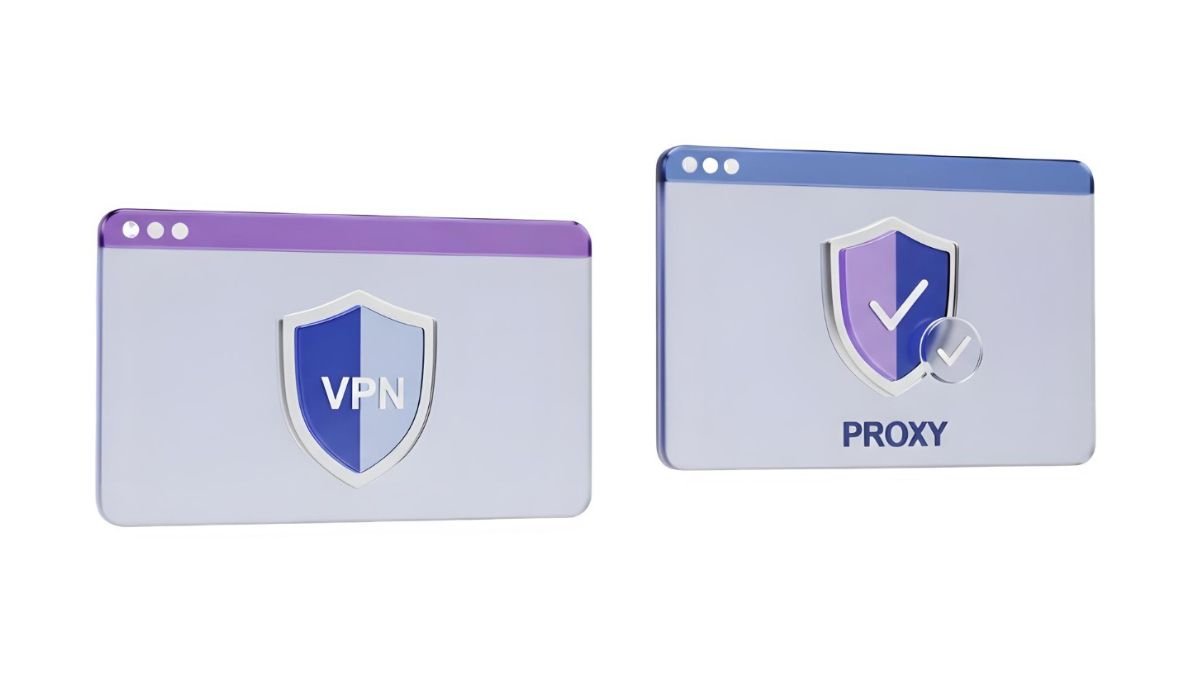
As you open your internet, the transparency of your online activities is shown. Internet service providers, internet advertisers, websites and even internet criminals can keep tabs on your online activities unless you have a secure connection. This is why many people use such privacy protection tools as Virtual Private Networks(VPNs) and proxies. The two can both mask your IP address and make Internet usage much more personal, albeit in the most dissimilar ways.
Many users confuse a proxy and a VPN. However, it is better to understand what the difference between the two as you may need a privacy solution, security solution, streaming solution, gaming solution or business solution.
This tutorial will familiarize you with the concept of the VPN, a proxy, how they should work, their advantages and disadvantages and what kind of VPN or proxy to use in different Internet activities.
What Is a VPN?
The Virtual private network, or as it is commonly known as VPN, is a service which creates a tunnel of safety and encryption that would occur between you and the internet. Once you manage to connect to a VPN server, all internet traffic passes through an encrypted tunnel and finally to its destination.
The procedure masks your real IP address and encrypts your data transfer across the internet to prevent instances of hacker attacks, trackers or internet service providers.
How a VPN Works?
When you use a VPN:
- Your computer is associated with a VPN server.
- On the internet, it is a VPN that will encrypt your traffic.
- The real IP address is masked.
The VPN server identifies itself with a new IP address as opposed to your IP address, to the websites.
To explain this, when you are in India, and you connect to a VPN server in the United States you will access the websites as being the United States.
The most important properties of VPN.
- Encrypts internet traffic
- Blocks your IP address.
- Protects Wi-Fi spaces.
- Precludes chances of tracking by a third party.
- Helps bypass geo-restrictions
- Increases online security and privacy.
What Is a Proxy?
A proxy server is a server that comes between you and the internet. Instead of initially loading a website, the proxy server is the first point of stop before loading a website.
The proxy server then sends your request to the site, retrieves the response and returns it to you.
Unlike VPN, most of the proxies do not encrypt your traffic over the internet. They are commonly employed in hiding your IP address or getting around geographical restrictions.
How a Proxy Works
With a proxy:
- The proxy is the one to which your web request is sent.
- The proxy server forwards the request to the website.
- The IP address of the proxy server can be seen by the website.
- The data is transferred to the proxy by the site.
- The proxy forwards the information to you.
Important Features of a Proxy.
- Disguise your IP address.
- Helps bypass blocked websites.
- Can improve privacy when browsing.
- Broadly applicable in web scraping or content filtering.
- Usually faster as no encryption is needed.
Key differences between the VPN and Proxy
Although both VPNs and proxies mask your IP, they are not the same and have significant differences in regard to their security, privacy, speed, and functionality.
1. Encryption and Security
Encryption represents the biggest difference between encrypting and a proxy.
A VPN encrypts all your traffic on the internet. This means that your internet usage cannot be easily tracked by hackers, internet companies and online trackers.
A proxy, in most instances, is not encrypted. Your information may still be accessible by other people, especially in an open Wi-Fi.
VPN
- Strong encryption
- Better security
- Protects sensitive data
Proxy
- Usually no encryption
- Lower security
- Data may be exposed
2. Privacy Protection
VPNs are also safer regarding privacy since it hides your IP address and your history is encrypted.
The proxies only conceal your befitting address. It is still possible to have your activity on the internet viewed by network administrators or third parties.
3. Coverage
A VPN encrypts all traffic on your internet like applications, browsing, and background services.
Most proxies are only specialised in terms of application or browser.
VPN Coverage
- Entire device protection
- Works together with all applications.
Proxy Coverage
- Limited to certain applications.
- In many instances, it is browser-specific.
4. Speed
VPNs may even slow down Internet connections a bit since data is encrypted.
The proxies may also be quicker, without the need to be encrypted.
Nevertheless, quality VPN services are likely to possess fast-speed servers that may minimize speed loss.
5. Cost
Free or cheap proxy services are numerous.
Stable VPN may be rather costly because it is commonly based on a subscription charge, since it is capable of affording increased amounts of security and infrastructure.
6. Compatibility
VPNs work with:
- Smartphones
- Laptops
- Smart TVs
- Routers
- Gaming consoles
The proxies are usually configured in the browsers or in individual applications.
Types of VPNs
VPN services are of different types.
- Remote Access VPN – It is the most common type that people use. It helps users to access the internet efficiently anywhere and to a secure level.
- Site-to-Site VPN – This type is used in companies where different offices need to be connected.
- Mobile VPN – It is envisaged to be employed in mobile devices that typically switch networks.
Types of Proxies
Proxies can also be of different types.
- HTTP Proxy – Intended to use it mostly to navigate the web.
- HTTPS Proxy – Documents low web traffic security.
- SOCKS Proxy – Supports different traffic types, including streaming and gaming.
- Transparent Proxy – They are used to block or check on the traffic in the internet that is utilized by organizations.
Advantages of VPN
- Better Online Security – The VPNs ensure that your information is secure against hackers and other cyber attacks.
- Predependable WLAN Public Wi-Fi Usage – Wi-Fi in cafes, airports or hotels is not safe to utilize publicly. Your data will be encrypted in the VPN.
- Access Geo-Restricted Content – Regional content can be unlocked using VPN since the virtual addresses are changeable.
- Improved Privacy – Nobody is able to track what you do in the internet as no details get transferred to the internet service providers and advertisers.
- Secure Remote Work – Businesses employ VPNs to help employees access internal systems in a safe manner.
Advantages of Proxy
- Faster Browsing – This is where the information does not require encryption by the proxies and in such a situation, it may be faster whilst browsing.
- Simple Setup – Many of the proxies are set up in a browser.
- Bypass Restrictions – Websites that are blocked can be unlocked using proxies.
- Useful for Automation – A proxy may be used by some businesses to web scrape or run a high number of accounts.
Disadvantages of VPNs
- Can Reduce Speed – Encryption may make your internet slow (a little).
- Subscription Costs – A good VPN provider can be offered either on a monthly or yearly basis.
- Some Websites block VPNs – Certain streaming platforms or websites filter and block VPN connections.
Disadvantages of Proxies
- Weak Security – Most of the proxies are not encrypted.
- Privacy Risks – Free proxies will either log your information or make your activities known.
- Limited Protection – Certain applications can only use the proxy connection.
- Unstable Connections – The free proxy is unreliable and slow.
VPN vs Proxy: Which is the best?
Depending upon your requirements, the right decision will be made.
Select VPN (You Wish):
- Strong online security
- Data encryption
- Security of wireless applications in the open Wi-Fi.
- Better privacy protection
- Granted access to remote work.
- They are all covered with apps/devices.
Choose a Proxy (Optional):
- Faster browsing speeds
- Basic IP masking
- The right to the restricted locations.
- Simple browser-based anonymity
- Inexpensive and simple choices to wear casually.
Final Thoughts
Both VPNs and proxies will mask your IP address and improve accessibility online, albeit differently.
VPN will be a better alternative when you want to enjoy high security, encryption, and ultimate protection of privacy on your whole machine. It is most suited to be used remotely, navigate safely, use Internet banking, and access free Wi-Fi without any fear.
Better is an approximation to simplicity of simply browsing anonymously, or evading minor constraints, or where the speed is of greater value than the safety.
In the choice between VPN and proxy, one should consider what factors are of primary interest to you: privacy, speed, security, or convenience. Getting to learn about such differences will help you make the right decision about what you require on the Internet.
Also Read: Best VPNs for Android: Detailed Review
About the Author